
Hi all,
[Mk 3, motorhome on 120 lowline chassis cab.]:
Brought it out of hibernation the other day. Took each wheel off (fitted Mk5 alloys last year) and checked that calipers/cylinders were free to slide nicely (which they were).
Went for a 2-mile test drive. Checked wheel temps. All well.
Later on, did about 10 miles (mainly 30-40mph in rush hour), ALL FOUR then really hot and stinking of overheating brake lining on arrival back home.
Have flushed/re-bled. No better. After 2 miles, alloy wheels still cold but reaching through and touching drums (heating up) and discs (finger burning)!
Can roll it back and forth on driveway by just leaning against it. Even in use, I tried stopping it rolling at an almost flat junction and it immediately starts to roll again without delay when pedal is released.
It’s as if it’s not releasing the pads/shoes quite far enough. They must be *just* kissing metal for part of each rotation. (I know from previous experience of not having *quite* slacked off the handbrake adjuster enough after putting on new shoes that this is all it takes ... and the heat was enough to expand the studs sufficiently to spin the wheelnuts off, that time!)
Driveability & brake pedal feel unaffected. I have master cyl seal kit arriving tomorrow (Friday) and new master cyl on Monday but I need to be away in it from late Tuesday (and I suspect the pipe union nuts will be seized solid after so many years)!
Any suggestions as to anything else I could do to fix this? Thanks.
*NOW BOOKED FOR 2026* Transitmania 17 @ Santa Pod 17th to 19th July 2026 *ALL DETAILS HERE*
Mk3 - weird overheating brake problem
Moderator: Luke
14 posts
• Page 1 of 1
Mk3 - weird overheating brake problem
 by eeedelli » Thu Aug 14, 2025 9:55 pm
1989 Autosleeper Legend GL on Mk 3 120 Diesel
- eeedelli
- Transit Addict

- Posts: 21
- Joined: Mon Jul 09, 2012 6:45 pm
Re: Mk3 - weird overheating brake problem
by metalworker0 » Thu Aug 14, 2025 10:46 pm
with it being 36 years old anything is possible .. sticking booster / servo -- there something called the reaction valve inside it , don't think you can take them apart, not sure how pouring oil inside it would react with the rubber diagram, but i know silicon spray does not degrade rubber --- simonize back to black is the most slippery product , through the hole where the vac pipe goes in, get it free then drain any residue.
also there could be rust inside of it .. which means a new servo
and put this into ebay
transit mk3 load valve
... you'll see two other types of valve that are in the lines that may or may not be fitted to your system
all the best.mark
also there could be rust inside of it .. which means a new servo
and put this into ebay
transit mk3 load valve
... you'll see two other types of valve that are in the lines that may or may not be fitted to your system
all the best.mark
-

metalworker0 - Transit Extremist

- Posts: 5433
- Joined: Wed May 05, 2021 4:43 pm
- Location: Prestatyn
Re: Mk3 - weird overheating brake problem
by eeedelli » Fri Aug 15, 2025 12:15 am
Yes I did wonder about the servo. I wouldn't want to put oil anywhere near it though - that spells death for most rubber components! Silicon spray is a good idea but I think the easiest way in would be if I can take the master cylinder off rather than trying to get it in through the much smaller vac pipe hole. (That would also presumably enable me to inspect/test the movement of the piston in the servo where it pokes through into the master cylinder.)
Looking at the parts catalogues, it seems there are 8 variants of the master cylinder that were fitted to model 120 (and, indeed, most chassis variants/models) but I don't know how to work out which type I've got. The only one I can get is 23.8mm rather than 22.2 so I hope it matches up! Similarly, the only seal re-build kit I could get is a 23.8mm (should arrive tomorrow). I know that mine has 3xM10 unions whereas others have 2xM10 and an M12.
That narrows it down to 4 master cylinders with the 3xM10 unions:
6151044 (86VB 2A032 BA) 23.8mm Bendix (Types P & S)
6151045 (86VB 2A032 CA) 22.2mm Bendix (Type N)
6151049(86VB 2A032 GA) 22.2mm ChassisCab/Windscreen (Type A )
6152301 (86VB 2A032 HA) 23.8mm All ChassisCabs with diesel (No 'type' letter listed)
I see there used to be servo repair kits available but presumably I'd need to match up the 'type' of servo to the 'type' of master cylinder ... but how do you know which 'type' is which? The only one I could get (on order now - should be here on Monday) is from TRW (PMK278), which is listed as equivalent to 6151044 (top one on the list above).
Servo repair kits:
Types A to E: 1587577 (78VB 2A154 AA)
Types N to S: 6151035 (86VB 2002 AA)
so it could be either of those ... and they're like hens' teeth now. I can only find some in Europe so that's no good for this rush job but might be required further down the line if nothing can be done in time.
Any idea what the 'reaction valve' does? Yes, rust inside could well be a major problem. Again, the servo units are like gold dust. Only one of the two types is possibly available (Lockheed ... and not actually in stock) in Europe and for nearly £500!!!
I think I have got a load apportioning valve fitted but I don't think it could be that, as that would only be affecting the rear wheel cylinders, not all four, I think? (It is, after all, there to limit the pressure fed to the rear wheels depending on the load being carried and consequent displacement of the rear springs.)
Looking at the parts catalogues, it seems there are 8 variants of the master cylinder that were fitted to model 120 (and, indeed, most chassis variants/models) but I don't know how to work out which type I've got. The only one I can get is 23.8mm rather than 22.2 so I hope it matches up! Similarly, the only seal re-build kit I could get is a 23.8mm (should arrive tomorrow). I know that mine has 3xM10 unions whereas others have 2xM10 and an M12.
That narrows it down to 4 master cylinders with the 3xM10 unions:
6151044 (86VB 2A032 BA) 23.8mm Bendix (Types P & S)
6151045 (86VB 2A032 CA) 22.2mm Bendix (Type N)
6151049(86VB 2A032 GA) 22.2mm ChassisCab/Windscreen (Type A )
6152301 (86VB 2A032 HA) 23.8mm All ChassisCabs with diesel (No 'type' letter listed)
I see there used to be servo repair kits available but presumably I'd need to match up the 'type' of servo to the 'type' of master cylinder ... but how do you know which 'type' is which? The only one I could get (on order now - should be here on Monday) is from TRW (PMK278), which is listed as equivalent to 6151044 (top one on the list above).
Servo repair kits:
Types A to E: 1587577 (78VB 2A154 AA)
Types N to S: 6151035 (86VB 2002 AA)
so it could be either of those ... and they're like hens' teeth now. I can only find some in Europe so that's no good for this rush job but might be required further down the line if nothing can be done in time.
Any idea what the 'reaction valve' does? Yes, rust inside could well be a major problem. Again, the servo units are like gold dust. Only one of the two types is possibly available (Lockheed ... and not actually in stock) in Europe and for nearly £500!!!
I think I have got a load apportioning valve fitted but I don't think it could be that, as that would only be affecting the rear wheel cylinders, not all four, I think? (It is, after all, there to limit the pressure fed to the rear wheels depending on the load being carried and consequent displacement of the rear springs.)
1989 Autosleeper Legend GL on Mk 3 120 Diesel
- eeedelli
- Transit Addict
- Posts: 21
- Joined: Mon Jul 09, 2012 6:45 pm
Re: Mk3 - weird overheating brake problem
by metalworker0 » Fri Aug 15, 2025 1:15 am
This may help you out a bit. as i sort of remember back in 1989 .. there were possibly only two makes of brake equipment fitted in most of the UK built vehicles .. that was Lockheed or Girling
Lockheed and Girling catalogues from the era
https://www.northwestautomotivehydrauli ... k/about-us
Lockheed Brake servos from the above.
https://irp-cdn.multiscreensite.com/948 ... ONS.-1.pdf
Note: all the part numbers
note there is a bendex catalogue there too
Some people chuck new old stock items on ebay and just put a part number off the box -- no vehicle ID
Perhaps amongst the listed items on ebay, you may find, rebuild kits for the servos or complete servos with no ID ,... that means cheap, so now you have all the info you need to hopefully get one cheap. note ebay -- any listing with a part number without vehicle ID usually means its going to be cheap. and probably genuine and not chinese.
i don't know what the reaction valve does .. i could probably look it up ..... but the point is, this is a close tolerance device that moves in and out in a sleeve .. which is why it may stick, in an old van, and sticking can cause the brakes to stay pressured up.
all the best.mark
Lockheed and Girling catalogues from the era
https://www.northwestautomotivehydrauli ... k/about-us
Lockheed Brake servos from the above.
https://irp-cdn.multiscreensite.com/948 ... ONS.-1.pdf
Note: all the part numbers
note there is a bendex catalogue there too
Some people chuck new old stock items on ebay and just put a part number off the box -- no vehicle ID
Perhaps amongst the listed items on ebay, you may find, rebuild kits for the servos or complete servos with no ID ,... that means cheap, so now you have all the info you need to hopefully get one cheap. note ebay -- any listing with a part number without vehicle ID usually means its going to be cheap. and probably genuine and not chinese.
i don't know what the reaction valve does .. i could probably look it up ..... but the point is, this is a close tolerance device that moves in and out in a sleeve .. which is why it may stick, in an old van, and sticking can cause the brakes to stay pressured up.
all the best.mark
-
metalworker0 - Transit Extremist
- Posts: 5433
- Joined: Wed May 05, 2021 4:43 pm
- Location: Prestatyn
Re: Mk3 - weird overheating brake problem
by eeedelli » Sun Aug 17, 2025 3:43 pm
Interesting site, which I had a look at. Thanks for that. I've bookmarked it for the future as there's a lot of potentially handy info there.
Progress update:
Managed to get a master cylinder reseal kit (delivered on Friday afternoon) so took it off to rebuild yesterday, anyway.
I couldn’t believe the amount of sludge in the master cylinder when dismantled, including in the tiny (0.75mm) holes that allow fluid back into the reservoir as the pads get thrown back when moving off again, so I thought that must be the culprit. (Strange, as I flushed last year when fitting a new wheel cyl and this is after a full flush a couple of days ago, too! Just goes to show!)
I measured the projection of the servo rod as about 16mm beyond the front of the servo and the counterbore in the primary piston is about 22mm from the same plane, so there’s about 6mm (~¼”) gap between the two, so I think it’s pretty unlikely to be the servo causing the problem.
After stripping the master cylinder, I couldn’t get the screw undone on the primary piston spring. I used two tie-wraps as spring compressors, snapped the ceramic end of my screwdriver trying to undo it (grrrr!) and even had a go with a manual impact driver but was only damaging the head of the screw, so had to give up and force the smaller seal over from the other end of the piston using a small screwdriver, which is Not Good as it has lightly scratched the black coating off the piston surface where the seal sits (so it might now rust gradually under there, though with luck the tight rubber seal will stop any fluid getting to the scratches … though that might be a bit overoptimistic)! I might also have wrinkled the shim-thin stainless steel washer that acts as a one-way valve.
However, after polishing and re-cleaning the cylinder, on re-assembly I found that, even having lubricated the cylinder and seals with brake fluid, when pressing it in and releasing it *gently* (like you would if just coasting up to lights), the piston would only spring back to about 12mm (~½”) short of the circlip, gradually creeping to about 6mm (~¼”). I had noticed some pitting at the bottom of the cylinder just about coincident with where the rearmost seal (closest to the servo) sits and this is the only seal that has fluid on just one side of it, so I suspect it could be the roughness of the piston combined with the reduced lubrication providing a bit of resistance to it returning fully home. (If you let go suddenly, it snaps back all the way to the circlip.)
Thinking this resistance might be increased further owing to mainly air still being in there rather than 3 of the 4 seals being immersed in fluid and therefore much better lubricated, I put it all back together on the vehicle, did a full bleed, stood on the pedal for ages to check for any slow leaks and took it for a test at lunchtime. It’s just the same! After just a 3-mile run, the drums are quite warm and the discs are finger-burning.
The frustrating thing, of course, is that, once it’s back on the vehicle and full of fluid, I can’t actually *see* any failure to fully return like I could when pushing it in with a screwdriver on the bench so it’s impossible to know for certain whether it is still actually doing that. The totally weird thing is that it still rolls perfectly unless on absolutely level ground and there’s no delay in it doing so the moment you release the pedal, even gently, which gives the initial impression that there’s nothing wrong. It's absolutely bizarre.
I’m still waiting for the replacement cylinder to arrive (hopefully tomorrow) so all I can do is fit it when it comes and hope that cures it. It’s really ‘touch and go’ as I’ve got campsites and tickets for the event I’m going to long-since booked and paid for, from Wednesday and across the bank hol weekend. (Panic now!)
Progress update:
Managed to get a master cylinder reseal kit (delivered on Friday afternoon) so took it off to rebuild yesterday, anyway.
I couldn’t believe the amount of sludge in the master cylinder when dismantled, including in the tiny (0.75mm) holes that allow fluid back into the reservoir as the pads get thrown back when moving off again, so I thought that must be the culprit. (Strange, as I flushed last year when fitting a new wheel cyl and this is after a full flush a couple of days ago, too! Just goes to show!)
I measured the projection of the servo rod as about 16mm beyond the front of the servo and the counterbore in the primary piston is about 22mm from the same plane, so there’s about 6mm (~¼”) gap between the two, so I think it’s pretty unlikely to be the servo causing the problem.
After stripping the master cylinder, I couldn’t get the screw undone on the primary piston spring. I used two tie-wraps as spring compressors, snapped the ceramic end of my screwdriver trying to undo it (grrrr!) and even had a go with a manual impact driver but was only damaging the head of the screw, so had to give up and force the smaller seal over from the other end of the piston using a small screwdriver, which is Not Good as it has lightly scratched the black coating off the piston surface where the seal sits (so it might now rust gradually under there, though with luck the tight rubber seal will stop any fluid getting to the scratches … though that might be a bit overoptimistic)! I might also have wrinkled the shim-thin stainless steel washer that acts as a one-way valve.
However, after polishing and re-cleaning the cylinder, on re-assembly I found that, even having lubricated the cylinder and seals with brake fluid, when pressing it in and releasing it *gently* (like you would if just coasting up to lights), the piston would only spring back to about 12mm (~½”) short of the circlip, gradually creeping to about 6mm (~¼”). I had noticed some pitting at the bottom of the cylinder just about coincident with where the rearmost seal (closest to the servo) sits and this is the only seal that has fluid on just one side of it, so I suspect it could be the roughness of the piston combined with the reduced lubrication providing a bit of resistance to it returning fully home. (If you let go suddenly, it snaps back all the way to the circlip.)
Thinking this resistance might be increased further owing to mainly air still being in there rather than 3 of the 4 seals being immersed in fluid and therefore much better lubricated, I put it all back together on the vehicle, did a full bleed, stood on the pedal for ages to check for any slow leaks and took it for a test at lunchtime. It’s just the same! After just a 3-mile run, the drums are quite warm and the discs are finger-burning.
The frustrating thing, of course, is that, once it’s back on the vehicle and full of fluid, I can’t actually *see* any failure to fully return like I could when pushing it in with a screwdriver on the bench so it’s impossible to know for certain whether it is still actually doing that. The totally weird thing is that it still rolls perfectly unless on absolutely level ground and there’s no delay in it doing so the moment you release the pedal, even gently, which gives the initial impression that there’s nothing wrong. It's absolutely bizarre.
I’m still waiting for the replacement cylinder to arrive (hopefully tomorrow) so all I can do is fit it when it comes and hope that cures it. It’s really ‘touch and go’ as I’ve got campsites and tickets for the event I’m going to long-since booked and paid for, from Wednesday and across the bank hol weekend. (Panic now!)
1989 Autosleeper Legend GL on Mk 3 120 Diesel
- eeedelli
- Transit Addict
- Posts: 21
- Joined: Mon Jul 09, 2012 6:45 pm
Re: Mk3 - weird overheating brake problem
by dumper » Sun Aug 17, 2025 4:02 pm
In the past I’ve resealed calapars and brake cylinders but never the master cylinder if you get that wrong you have no brakes
2025 MK 8 L3 H3 Motorsport campervan
Past camper vans
1974 mk1 v4 with 2.0 pinto fitted
1986 mk3 2.5 di swb
1990 190 lwb 2.5 di
1998 100 lwb 2.5 di
2006 350 jumbo 135 tdci
2015 MK 8 L4 H3 motorsport campervan
Past camper vans
1974 mk1 v4 with 2.0 pinto fitted
1986 mk3 2.5 di swb
1990 190 lwb 2.5 di
1998 100 lwb 2.5 di
2006 350 jumbo 135 tdci
2015 MK 8 L4 H3 motorsport campervan
- dumper
- Transit Extremist
- Posts: 6287
- Joined: Sun Jan 20, 2008 2:56 pm
- Location: Lincolnshire
Re: Mk3 - weird overheating brake problem
by eeedelli » Sun Aug 17, 2025 4:05 pm
dumper wrote:In the past I’ve resealed calapars and brake cylinders but never the master cylinder if you get that wrong you have no brakes
Indeed - that was a worry in the back of my mind. However, it seems to be behaving completely normally and I took the precaution of standing on the pedal for about about 30 seconds to check there were no slow leaks. It hasn't solved the slight binding problem all round, though.
Hopefully a new cylinder will, so long as it arrives in time!
1989 Autosleeper Legend GL on Mk 3 120 Diesel
- eeedelli
- Transit Addict
- Posts: 21
- Joined: Mon Jul 09, 2012 6:45 pm
Re: Mk3 - weird overheating brake problem
by metalworker0 » Sun Aug 17, 2025 4:11 pm
the sludge is the result of the seals breaking down or someones put dot 5 silicon fluid in it at one time or other.
Cant be typing the whole explanation .. so here's what google AI says after i asked:
" Dot 5 mixed with others - the result"
Mixing DOT 5 brake fluid with any other type of brake fluid, including DOT 3, DOT 4, and DOT 5.1, is not recommended and can cause serious problems. DOT 5 is a silicone-based fluid, while the others are glycol-based, and they are not compatible. Mixing them can lead to brake system failure due to gelling, swelling of seals, and reduced braking performance.
Here's why mixing DOT 5 is problematic:
Incompatibility:
DOT 5 is a silicone-based fluid, while DOT 3, DOT 4, and DOT 5.1 are glycol-based. These two types of fluids are chemically incompatible and will not mix properly.
Gelling:
When DOT 5 is mixed with glycol-based fluids, the mixture can thicken and gel, obstructing brake lines and causing the brakes to malfunction.
Seal Damage:
The silicone in DOT 5 can cause swelling or deterioration of seals and rubber components in brake systems not designed for it, leading to leaks and brake failure.
Reduced Performance:
Mixing fluids can compromise the boiling point and other critical properties of the brake fluid, leading to reduced braking performance.
In short, if your brake system is designed for DOT 3, DOT 4, or DOT 5.1, only use those fluids. If your system uses DOT 5, only use DOT 5.
Cant be typing the whole explanation .. so here's what google AI says after i asked:
" Dot 5 mixed with others - the result"
Mixing DOT 5 brake fluid with any other type of brake fluid, including DOT 3, DOT 4, and DOT 5.1, is not recommended and can cause serious problems. DOT 5 is a silicone-based fluid, while the others are glycol-based, and they are not compatible. Mixing them can lead to brake system failure due to gelling, swelling of seals, and reduced braking performance.
Here's why mixing DOT 5 is problematic:
Incompatibility:
DOT 5 is a silicone-based fluid, while DOT 3, DOT 4, and DOT 5.1 are glycol-based. These two types of fluids are chemically incompatible and will not mix properly.
Gelling:
When DOT 5 is mixed with glycol-based fluids, the mixture can thicken and gel, obstructing brake lines and causing the brakes to malfunction.
Seal Damage:
The silicone in DOT 5 can cause swelling or deterioration of seals and rubber components in brake systems not designed for it, leading to leaks and brake failure.
Reduced Performance:
Mixing fluids can compromise the boiling point and other critical properties of the brake fluid, leading to reduced braking performance.
In short, if your brake system is designed for DOT 3, DOT 4, or DOT 5.1, only use those fluids. If your system uses DOT 5, only use DOT 5.
-
metalworker0 - Transit Extremist
- Posts: 5433
- Joined: Wed May 05, 2021 4:43 pm
- Location: Prestatyn
Re: Mk3 - weird overheating brake problem
by eeedelli » Sun Aug 17, 2025 4:22 pm
Yep - good shout but I'm aware of that issue and I've never put anything other than Dot 3 or 4 in it.
The only time I had a garage do anything on this was when this master cyl was fitted as a new replacement to get it through MOT and that was 23 years ago. (They were pretty good - owned by two brothers. I used them for MOTs and occasional other work for years, one of whom died and the other has long since retired. They specialised in rebuilding auto gearboxes so I would very much doubt they'd have made that mistake with having to be meticulous etc... and I'd have thought it would have produced trouble before that length of time even if they had.)
The sludge was more like accumulated brown rust silt, tbh, not the sort of 'reaction jelly' you might get from mixing the wrong fluids. There was probably between a teaspoon and a desert-spoonful of silt in there (~5-10ml, in total ... which doesn't sound much but in a cylinder that size, more than enough to cause trouble ... or maybe not, as the trouble is still there! )
)
The only time I had a garage do anything on this was when this master cyl was fitted as a new replacement to get it through MOT and that was 23 years ago. (They were pretty good - owned by two brothers. I used them for MOTs and occasional other work for years, one of whom died and the other has long since retired. They specialised in rebuilding auto gearboxes so I would very much doubt they'd have made that mistake with having to be meticulous etc... and I'd have thought it would have produced trouble before that length of time even if they had.)
The sludge was more like accumulated brown rust silt, tbh, not the sort of 'reaction jelly' you might get from mixing the wrong fluids. There was probably between a teaspoon and a desert-spoonful of silt in there (~5-10ml, in total ... which doesn't sound much but in a cylinder that size, more than enough to cause trouble ... or maybe not, as the trouble is still there!
)1989 Autosleeper Legend GL on Mk 3 120 Diesel
- eeedelli
- Transit Addict
- Posts: 21
- Joined: Mon Jul 09, 2012 6:45 pm
Re: Mk3 - weird overheating brake problem
by metalworker0 » Sun Aug 17, 2025 4:30 pm
OK, you have one thing left; all of the flexible hoses have failed at the same time .. leading to breakdown of the rubber internally , this causes chunks to peal off and act as one way valves ... this is a common fail for flex hoses . especially old ones.
all the best.mark
all the best.mark
-
metalworker0 - Transit Extremist
- Posts: 5433
- Joined: Wed May 05, 2021 4:43 pm
- Location: Prestatyn
Re: Mk3 - weird overheating brake problem
by eeedelli » Sun Aug 17, 2025 4:38 pm
Yep - that was also in the back of my mind but I reckoned the chances of all of them going exactly the same way simultaneously, whilst not impossible, certainly has to be very very improbable!
Mind you, with my luck at present, I wouldn't rule it out. I'm certainly in Victor Meldrew mode. "I don't believe it!!"
Given that I did spot the master cyl failing to come all the way back to the circlip after slowly releasing the piston when it was on the bench (albeit empty of fluid), I'm going to try a new master cyl when it arrives (hopefully tomorrow) and hope that cures it.
If not then the holiday is dead and I'll have to investigate the hoses and/or servo as a possibility.
Mind you, with my luck at present, I wouldn't rule it out. I'm certainly in Victor Meldrew mode. "I don't believe it!!"
Given that I did spot the master cyl failing to come all the way back to the circlip after slowly releasing the piston when it was on the bench (albeit empty of fluid), I'm going to try a new master cyl when it arrives (hopefully tomorrow) and hope that cures it.
If not then the holiday is dead and I'll have to investigate the hoses and/or servo as a possibility.
1989 Autosleeper Legend GL on Mk 3 120 Diesel
- eeedelli
- Transit Addict
- Posts: 21
- Joined: Mon Jul 09, 2012 6:45 pm
Re: Mk3 - weird overheating brake problem [solved]
by eeedelli » Wed Sep 03, 2025 9:52 am
Just a follow-up to this.
The new master cylinder finally escaped from customs delay, arrived and ... it was the wrong one! (The larger Bendix one for the 40mm recess in the booster whereas mine was the 36mm Lockheed.) Having established which was the wrong one, they then found that they could get the right one in 24 hours! However, it still hadn't arrived by the morning I was due to leave. (A voicemail was left for me when it finally turned up at the factors in late afternoon!)
However, I finally found the problem a couple of hours after I was due to depart!
I pulled the rubber bellows off the booster under the dash to see whether the little air filter was blocked on the atmospheric side of the diaphragm. (I realised that, if it was restricting airflow, it could be failing to expel the air again and helping to hold the brakes on for a while after application.)
The filter itself wasn't blocked, as such, but the small foam sponge disc had completely disintegrated! On removing the thousands of tiny bits of sponge, I noticed two things:
1) It no longer wheezed like an asthmatic docker on 80/day when pressing the pedal and
2) the brakes no longer overheated! Hooray!
I was able to throw some basic supplies in and drive, making it to the event for which I'd had tickets all year, just in time. I made several stops along the way to check the situation and there were no further instances of overheating all week.
It just goes to show that the most unlikely and bizarre things can sometimes be the solution!
The new master cylinder finally escaped from customs delay, arrived and ... it was the wrong one! (The larger Bendix one for the 40mm recess in the booster whereas mine was the 36mm Lockheed.) Having established which was the wrong one, they then found that they could get the right one in 24 hours! However, it still hadn't arrived by the morning I was due to leave. (A voicemail was left for me when it finally turned up at the factors in late afternoon!)
However, I finally found the problem a couple of hours after I was due to depart!
I pulled the rubber bellows off the booster under the dash to see whether the little air filter was blocked on the atmospheric side of the diaphragm. (I realised that, if it was restricting airflow, it could be failing to expel the air again and helping to hold the brakes on for a while after application.)
The filter itself wasn't blocked, as such, but the small foam sponge disc had completely disintegrated! On removing the thousands of tiny bits of sponge, I noticed two things:
1) It no longer wheezed like an asthmatic docker on 80/day when pressing the pedal and
2) the brakes no longer overheated! Hooray!
I was able to throw some basic supplies in and drive, making it to the event for which I'd had tickets all year, just in time. I made several stops along the way to check the situation and there were no further instances of overheating all week.
It just goes to show that the most unlikely and bizarre things can sometimes be the solution!
1989 Autosleeper Legend GL on Mk 3 120 Diesel
- eeedelli
- Transit Addict
- Posts: 21
- Joined: Mon Jul 09, 2012 6:45 pm
Re: Mk3 - weird overheating brake problem
by metalworker0 » Wed Sep 03, 2025 5:51 pm
That's great , i would never have thought about that in a million years -- i will now.
There have been some posters here that have had similar problems, and no ones put this as a solution, in the future that one more suspect to list should they have problems .
you mean this thing at the top of the bellows
https://i.ebayimg.com/images/g/Q14AAeSw ... l1600.webp
whole bellows listed on catcar.info .. wonder if sponge comes with it
if 1994 ----6754691 FORD - not on ebay or anywhere else
91 - 94 - 6754691 also same that's as far back as i can go on catcat.info
another impossible to find item
but later transit servos mk6 and 7 have very similar looking bellows and breather
all the best.mark
There have been some posters here that have had similar problems, and no ones put this as a solution, in the future that one more suspect to list should they have problems .
you mean this thing at the top of the bellows
https://i.ebayimg.com/images/g/Q14AAeSw ... l1600.webp
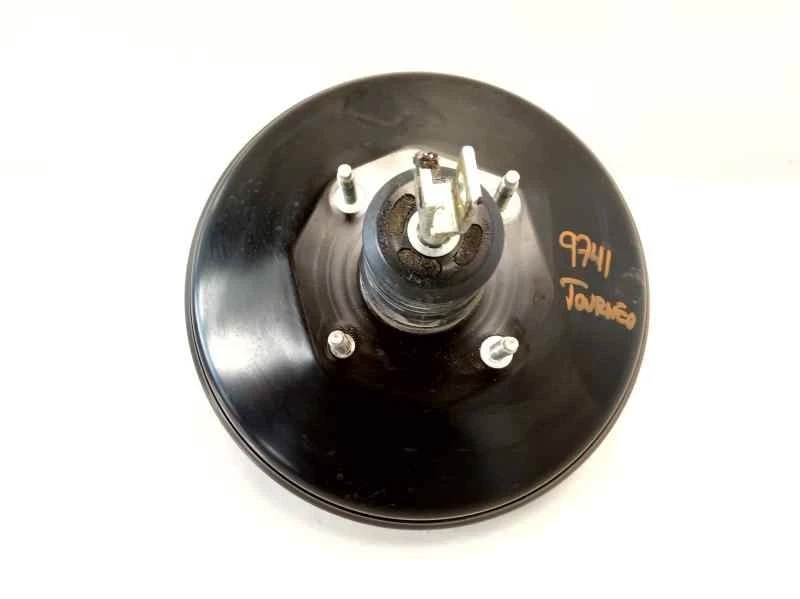
whole bellows listed on catcar.info .. wonder if sponge comes with it
if 1994 ----6754691 FORD - not on ebay or anywhere else
91 - 94 - 6754691 also same that's as far back as i can go on catcat.info
another impossible to find item
but later transit servos mk6 and 7 have very similar looking bellows and breather
all the best.mark
-
metalworker0 - Transit Extremist
- Posts: 5433
- Joined: Wed May 05, 2021 4:43 pm
- Location: Prestatyn
Re: Mk3 - weird overheating brake problem
by eeedelli » Wed Sep 03, 2025 7:17 pm
Yes - that's it. You can just make out the sponge foam around the rod.
1989 Autosleeper Legend GL on Mk 3 120 Diesel
- eeedelli
- Transit Addict
- Posts: 21
- Joined: Mon Jul 09, 2012 6:45 pm
14 posts
• Page 1 of 1
Return to Technical Problems & Questions
Who is online
Users browsing this forum: No registered users