
Then they assisted you to commit a crimeFunny that. I took my test in a Talbot Express LWB HR van back in 1998. I failed first time for only doing 60mph on a clear NSL dual carrigeway. Did 70mph on the re-test and passed
*NOW BOOKED FOR 2026* Transitmania 17 @ Santa Pod 17th to 19th July 2026 *ALL DETAILS HERE*
when is a van not a van?
Moderator: Luke
32 posts
• Page 2 of 3 • 1, 2, 3
Re: when is a van not a van?
 by AlanN » Wed Mar 10, 2010 9:58 am
- AlanN
- Site Moderator
- Posts: 14176
- Joined: Mon Jan 01, 2007 1:23 pm
- Location: Rayleigh Essex
Re: when is a van not a van?
by dumper » Wed Mar 10, 2010 10:30 am
hi what will be the speed limit for a campervan mine is a 56 jumbo grv 3500 kg thanks
2025 MK 8 L3 H3 Motorsport campervan
Past camper vans
1974 mk1 v4 with 2.0 pinto fitted
1986 mk3 2.5 di swb
1990 190 lwb 2.5 di
1998 100 lwb 2.5 di
2006 350 jumbo 135 tdci
2015 MK 8 L4 H3 motorsport campervan
Past camper vans
1974 mk1 v4 with 2.0 pinto fitted
1986 mk3 2.5 di swb
1990 190 lwb 2.5 di
1998 100 lwb 2.5 di
2006 350 jumbo 135 tdci
2015 MK 8 L4 H3 motorsport campervan
- dumper
- Transit Extremist

- Posts: 6362
- Joined: Sun Jan 20, 2008 2:56 pm
- Location: Lincolnshire
Re: when is a van not a van?
by Mike » Wed Mar 10, 2010 11:55 am
GBBiker wrote:Most Land Rovers and Range Rovers weigh more than 2000kg UNLADEN (in fact, the only models under that are the Freelander and some Defender models), never mind the blind fat fcuker behind the wheel on his mobile phoneWhy aren't they included in the reduced speed limits?
You haven't thought this through have you? The rule makers don't drive vans!
- Mike
- Wind up merchant!
- Posts: 19592
- Joined: Tue Feb 13, 2007 11:08 pm
- Location: HP17 0UZ
Re: when is a van not a van?
by trigger » Wed Mar 10, 2010 1:03 pm
So what could i do to make it "not a van", side windows, seats in back etc?
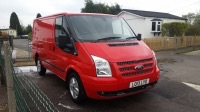
2013 mk7 Transit 125 Limited swb
1982 mk2 Granada 2.9 injection special Cosworth
Mk5 Transit the daddy
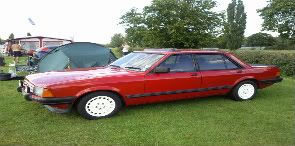
1982 mk2 Granada 2.9 injection special Cosworth
Mk5 Transit the daddy
-
trigger - Transit Extremist
- Posts: 5325
- Joined: Sat Jun 07, 2008 10:24 am
- Location: Hertfordshire
Re: when is a van not a van?
by Gavin » Wed Mar 10, 2010 1:24 pm
i think the only established way to do it is register it as a motorhome, but even then theres lots of stupid hoops to jump through.
all the info is here:
http://www.campervanlife.com/building/legal
all the info is here:
http://www.campervanlife.com/building/legal
2007 T300 110 GLX MWB low roof with Twin side doors & blue ambition paint.
1994 2.0 EFI 80 SWB cosworth 24v work in very slow progress. Radiant Pink.
1994 2.0 EFI 80 SWB cosworth 24v work in very slow progress. Radiant Pink.
-
Gavin - Transit Fanatic

- Posts: 2012
- Joined: Sun Nov 12, 2006 10:47 pm
- Location: hertfordshire
Re: when is a van not a van?
by Mike » Wed Mar 10, 2010 1:57 pm
trigger wrote:So what could i do to make it "not a van", side windows, seats in back etc?
Check up on the regs for 'dual purpose' vehicle, you may be able to do it under those?
- Mike
- Wind up merchant!
- Posts: 19592
- Joined: Tue Feb 13, 2007 11:08 pm
- Location: HP17 0UZ
Re: when is a van not a van?
by Gavin » Wed Mar 10, 2010 2:43 pm
that won't work. the dual purpose vehicle regs are aimed at landrovers, L200's and the like. to be a classes as a dual purpose vehicle it MUST be a 4X4.
like i said, the only established way the authorities recognise is the self build camper route. you could try registering it as a minibus or an mpv, but you'd probably have to go through SVA. you'd be better starting with a minibus or a tourneo.
the law is an arse. the GVM, axle loads and payload weights of my new galaxy mpv and my transit 80 are almost the same, yet two different sets of rules apply.
like i said, the only established way the authorities recognise is the self build camper route. you could try registering it as a minibus or an mpv, but you'd probably have to go through SVA. you'd be better starting with a minibus or a tourneo.
the law is an arse. the GVM, axle loads and payload weights of my new galaxy mpv and my transit 80 are almost the same, yet two different sets of rules apply.
2007 T300 110 GLX MWB low roof with Twin side doors & blue ambition paint.
1994 2.0 EFI 80 SWB cosworth 24v work in very slow progress. Radiant Pink.
1994 2.0 EFI 80 SWB cosworth 24v work in very slow progress. Radiant Pink.
-
Gavin - Transit Fanatic
- Posts: 2012
- Joined: Sun Nov 12, 2006 10:47 pm
- Location: hertfordshire
Re: when is a van not a van?
by Mike » Wed Mar 10, 2010 3:01 pm
Gavin wrote:to be a classes as a dual purpose vehicle it MUST be a 4X4.
Good point young Gavin.
- Mike
- Wind up merchant!
- Posts: 19592
- Joined: Tue Feb 13, 2007 11:08 pm
- Location: HP17 0UZ
Re: when is a van not a van?
by Gavin » Wed Mar 10, 2010 5:52 pm
im not so sure it is now. every web reference i can find says it must be 4x4, but then i found this, from the 6th edition of the mot guide, which seems to say different:
the key wrods there are either and or. not sure if the transit will satisfy the glass area as ive not measured it. but going by that it isnt unique to 4x4's, even though that is the type of vehicle it is aimed at.
Dual purpose vehicles 3. A `Dual purpose vehicle' is one that is constructed or adapted for the carriage of both passenger(s) and goods or burden of any description; and has an unladen weight (ULW) not exceeding 2,040 kg; and which either:
(a) is so constructed or adapted so that the driving power of the engine, is, or by the use of the appropriate controls can be, transmitted to all the wheels of the vehicle; or
(b) satisfies the following conditions as to construction: (i) is permanently fitted with a rigid roof, with or without a sliding panel; (ii) the area to the rear of the driver's seat must: · be permanently fitted with at least one row of transverse seats (fixed or folding) for two or more passengers, and those seats must be properly sprung or cushioned and provided with upholstered backrests, attached either to the seats or to a side or the floor of the vehicle; and · be lit on each side and at the rear by a window or windows of glass or other transparent material having an aggregate area of not less than 1,850cm2 on each side and not less than 770cm2 at the rear; (iii) the distance between the rearmost part of the steering wheel and the backrests of the row of transverse seats satisfying the requirements specified in the first paragraph of item (b) (ii) (or, if there is more than one such row of seats, the distance between the rearmost part of the steering wheel and the backrests of the rearmost such row) must, when the seats are ready for use, be not less than one third of the distance between the rearmost part of the steering wheel and the rearmost part of the floor of the vehicle.
the key wrods there are either and or. not sure if the transit will satisfy the glass area as ive not measured it. but going by that it isnt unique to 4x4's, even though that is the type of vehicle it is aimed at.
2007 T300 110 GLX MWB low roof with Twin side doors & blue ambition paint.
1994 2.0 EFI 80 SWB cosworth 24v work in very slow progress. Radiant Pink.
1994 2.0 EFI 80 SWB cosworth 24v work in very slow progress. Radiant Pink.
-
Gavin - Transit Fanatic
- Posts: 2012
- Joined: Sun Nov 12, 2006 10:47 pm
- Location: hertfordshire
Re: when is a van not a van?
by towncruiser » Sun Mar 14, 2010 10:16 pm
so is a tourneo
50 or 60 on a single dc way
60 or 70 on a double dc way
50 or 60 on a single dc way
60 or 70 on a double dc way
-
towncruiser - Transit Devotee

- Posts: 536
- Joined: Sat Sep 06, 2008 3:38 pm
- Location: WALES
Re: when is a van not a van?
by winterheating » Sun Mar 14, 2010 10:30 pm
60 single
70 double
70 motorway
70 double
70 motorway
Last edited by winterheating on Mon Mar 15, 2010 1:07 am, edited 1 time in total.
-

winterheating - Transit Extremist
- Posts: 10872
- Joined: Tue Jul 01, 2008 10:21 pm
- Location: Co.Durham Darlington
Re: when is a van not a van?
by Mike » Mon Mar 15, 2010 12:22 am
towncruiser wrote:so is a tourneo
50 or 60 on a single dc way
60 or 70 on a double dc way
It makes no difference if it's single or double.
- Mike
- Wind up merchant!
- Posts: 19592
- Joined: Tue Feb 13, 2007 11:08 pm
- Location: HP17 0UZ
Re: when is a van not a van?
by Gavin » Mon Mar 15, 2010 1:04 am
i thought a toureno was an mpv and therefore car rules apply?
2007 T300 110 GLX MWB low roof with Twin side doors & blue ambition paint.
1994 2.0 EFI 80 SWB cosworth 24v work in very slow progress. Radiant Pink.
1994 2.0 EFI 80 SWB cosworth 24v work in very slow progress. Radiant Pink.
-
Gavin - Transit Fanatic
- Posts: 2012
- Joined: Sun Nov 12, 2006 10:47 pm
- Location: hertfordshire
Re: when is a van not a van?
by winterheating » Mon Mar 15, 2010 1:08 am
so a fully loaded tourneo can do

winterheating wrote:60 single
70 double
70 motorway
-
winterheating - Transit Extremist
- Posts: 10872
- Joined: Tue Jul 01, 2008 10:21 pm
- Location: Co.Durham Darlington
Re: when is a van not a van?
by JonHayward » Sun Apr 18, 2010 11:44 pm
This has been bugging me for months as I drive a Tourneo. Is it a car? Is it a van?? Is it a minibus?!? This is what I've come up with:
MOST Transits come under the van and minibus rules (50 on a single carriageway; 60 on a duel carriageway; 70 on a motorway)
EXCEPTIONS: all Tourneos and buses up to 9 seats in total and some crew vans (depending on size and unladen weight)!!! They get treated as cars (Tourneos) or dual purpose vehicles (crew vans). So that's 60 on a single carriageway; 70 on a duel carriageway; 70 on a motorway
REFERENCES
The Freight Transport Association (http://www.fta.co.uk/emembership/year-b ... 8/cars.pdf) states:
...so as far as I can see, that covers off the Tourneo and the 9-seat minibus too.
...so I read that to mean that if a crew van has side and back windows (had better check the glass sizes though as well as the unladen weight while you're there!), and the length of the rear floor is no more than twice the length of the seating area, it is classed as 'dual purpose' and can go faster!!!!!!
....and 'car derived' means a little hunchback with its seats taken out and its side windows blanked (Corsa / Fiesta / Punto / etc). It doesn't mean a small van based on the platform of a small car ([Corsa] Combo, etc)!
Just for good measure, the Minibus Website (http://www.minibuswebsite.com/htm/definition.htm) confirms
...so a Tourneo is definitely NOT a minibus
Does that help, or have I just confused the issue?!?
Jon.
MOST Transits come under the van and minibus rules (50 on a single carriageway; 60 on a duel carriageway; 70 on a motorway)
EXCEPTIONS: all Tourneos and buses up to 9 seats in total and some crew vans (depending on size and unladen weight)!!! They get treated as cars (Tourneos) or dual purpose vehicles (crew vans). So that's 60 on a single carriageway; 70 on a duel carriageway; 70 on a motorway
REFERENCES
The Freight Transport Association (http://www.fta.co.uk/emembership/year-b ... 8/cars.pdf) states:
The term ‘car’ is generally taken to mean a vehicle constructed for the carriage of not more than eight passengers and their effects.
...so as far as I can see, that covers off the Tourneo and the 9-seat minibus too.
A dual-purpose vehicle is defined in the Road Vehicles (Construction and Use) Regulations 1986 as a vehicle constructed or adapted to carry both passengers and goods of any description which has an unladen weight not exceeding 2,040kg. It must either have four-wheel drive or satisfy the following conditions:
1 it must be permanently fitted with a rigid roof with or without a sliding panel; and
2 the area behind the driver’s seat must be permanently fitted with at least one row of transverse seats (fixed or folding) for two or more passengers. These seats must be properly sprung or cushioned and have upholstered back rests attached either to the seats, the floor or the side of the vehicle. This area must have window(s) of glass or other transparent material with a total area of not less than 1,850sq cm on each side and not less than 770sq cm at the rear; and
3 the distance between the rearmost part of the steering wheel and the backrests of the transverse seats must, when the seats are ready for use, be not less than one-third of the distance between the rearmost part of the steering wheel and the rearmost part of the floor. If there is more than one row of seats, this criterion relates to the distance between the steering wheel and the backrests of the rear row.
...so I read that to mean that if a crew van has side and back windows (had better check the glass sizes though as well as the unladen weight while you're there!), and the length of the rear floor is no more than twice the length of the seating area, it is classed as 'dual purpose' and can go faster!!!!!!
The term ‘van’ is generally taken to mean a vehicle constructed or adapted primarily to carry goods, with a gross vehicle weight of up to 3,500kg. For speed limits, vans are effectively separated into two categories – those that are car derived and those that are not.
....and 'car derived' means a little hunchback with its seats taken out and its side windows blanked (Corsa / Fiesta / Punto / etc). It doesn't mean a small van based on the platform of a small car ([Corsa] Combo, etc)!
Just for good measure, the Minibus Website (http://www.minibuswebsite.com/htm/definition.htm) confirms
"Minibus" - a motor vehicle which is constructed or adapted to carry more than 8 but not more than 16 seated passengers in addition to the driver.
...so a Tourneo is definitely NOT a minibus
Does that help, or have I just confused the issue?!?
Jon.
Mk5 12-seat bus, now sold to make way for...
Mk7 9-seat Tourneo with shiney bits!
Mk7 9-seat Tourneo with shiney bits!
-

JonHayward - Newbie
- Posts: 3
- Joined: Sun Jun 28, 2009 4:11 am
- Location: Ashford, Kent
32 posts
• Page 2 of 3 • 1, 2, 3
Return to Technical Problems & Questions
Who is online
Users browsing this forum: No registered users